
Dr. Panda Restaurant 2
Dr. PandaEducational
4.1270.00 Reviews
- Version
- 26.3.55
- Installs
- 100.00K
- Age Rating
- Everyone
Screenshots
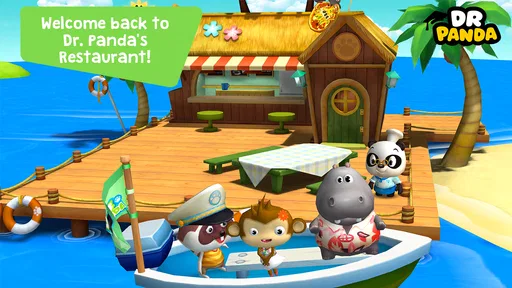
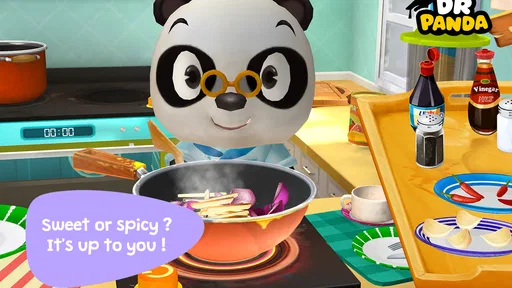
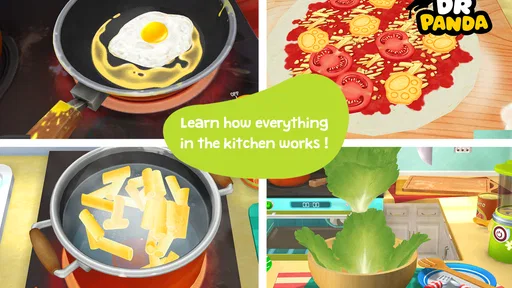
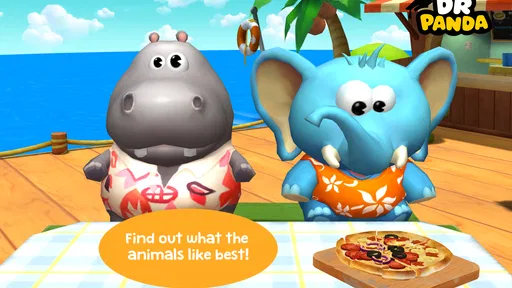
Our Review of Dr. Panda Restaurant 2
 Analysis by Appyee
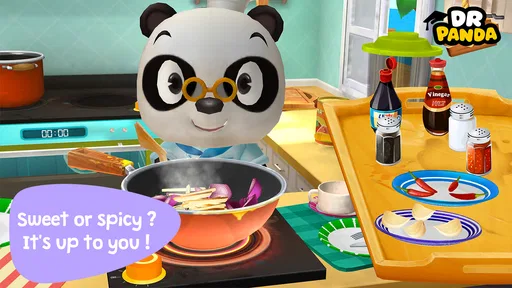
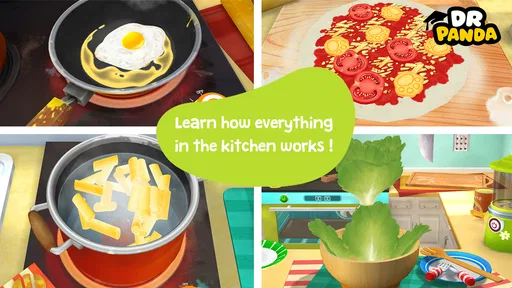
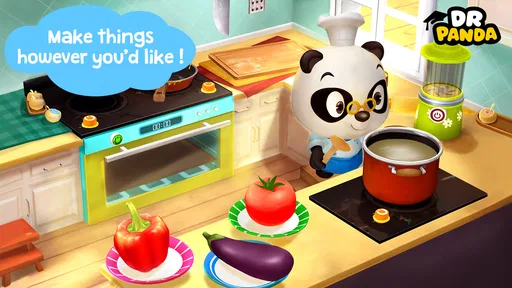
I found Dr. Panda Restaurant 2 most enjoyable when I treated it less like a game with a score to chase and more like a small, playful kitchen for children. The idea is simple: kids take charge of a restaurant, prepare food, and decide how to serve their customers. That simplicity is also the reason it works. A child can understand the basic activity quickly, yet still spend time experimenting with ingredients, cooking steps, and presentation.
This is an educational game from Dr. Panda, aimed at Everyone, and it feels designed for younger players rather than adults looking for a demanding cooking simulation. I would recommend it to families who want screen time with a creative, hands-on quality. I would not choose it for a child who needs a clear campaign, competitive goals, or constant new challenges. Its appeal comes from open-ended play, not from progression systems or pressure.
How the restaurant feels in everyday play
When I handed the game to a child, the strongest first impression was how quickly the kitchen invited exploration. There is no complicated rulebook to study before getting started. The child can move through the restaurant routine naturally: choose what to prepare, work with the food, and respond to the customers. That makes it suitable for independent play, although a younger child may still enjoy having an adult nearby to talk through what is happening.
The restaurant setting gives the activities a useful context. Instead of presenting isolated educational exercises, the game turns cooking into a role-play situation. A child is not merely completing a task; they are pretending to run a place where other characters are waiting for a meal. That small change matters because it encourages decision-making and storytelling. I noticed that children often narrate what they are doing, invent reasons for their choices, and create their own little restaurant routines.
The educational value is informal rather than classroom-like. It can support sequencing, attention, hand-eye coordination, and imaginative play, but it does not feel like a lesson with answers to memorize. Preparing a dish requires the player to notice what comes next and react to what is on screen. For a parent, that makes it a better fit for relaxed learning through play than for practicing a specific academic subject.
One useful way to use it is as a short after-school activity. A child can play independently while a parent prepares a real meal, then describe the virtual dishes afterward. That creates an easy conversation about ingredients, kitchen routines, and serving other people. I would not present the game as a substitute for real cooking, but it can be a gentle introduction to the idea that food preparation involves choices and order.
What children can learn through the kitchen
The most valuable learning comes from the freedom to try something, observe the result, and try again. That loop is more meaningful here than a simple reward for tapping the correct object. A child can develop patience by finishing a preparation step, and they can practice planning by thinking about what a customer might need next. These are small skills, but the restaurant theme gives them a reason to matter.
There is also a social layer. Serving customers encourages children to think about another character’s experience, even when the interaction remains playful. Parents can use that moment to ask questions such as, “What would make this customer happy?” or “What should we prepare first?” Those prompts turn passive tapping into shared problem-solving without making the session feel like homework.
My main tip is to avoid taking over the controls. It can be tempting to show a child the fastest way to complete an action, but the game is more useful when the child has room to make harmless mistakes. Letting them decide how to approach the kitchen reveals whether they understand the sequence and gives the role-play more personality.
A practical test for parents
If you are deciding whether it suits your family, watch what happens during the first few minutes. Does the child begin experimenting without repeated instructions? Do they talk about the customers or the food? Do they return to the activity because they want to invent another restaurant scenario? Those reactions are more important than whether they finish a particular task.
On the other hand, if your child immediately asks where the levels are, how to unlock the next area, or how to beat a high score, this may feel too loose. The game does not seem built around the usual arcade loop of failure, retrying, and improving a number. Its satisfaction comes from making choices and acting them out, so children who prefer structured objectives may lose interest sooner.
Current state, evolution, and the experience for existing users
The current version is 26.3.55, and the game has been available since February 12, 2014. That history is useful context: this is an established children’s title, not a new experiment trying to prove its basic idea. The core concept remains easy to understand because it does not depend on complicated trends or a large amount of text. A child can approach it as a familiar pretend-play kitchen even without knowing anything about the series.
For a new player, the age of the game is not automatically a problem. In fact, the straightforward design can be an advantage on a family device. The restaurant activity is focused, and the interface does not ask a young child to manage a large collection of menus or account decisions. If you are looking for a gentle cooking role-play experience, the central idea still makes sense today.
For existing users, the version number signals that the product has continued to receive maintenance over time, but I would separate that from assumptions about major changes. A newer version does not by itself mean that the game has been transformed into a different kind of experience. I would approach updates as support for the established restaurant concept rather than expect a completely redesigned educational system.
That distinction matters when choosing it for a child. If your child already enjoys this style of play, the current release should feel like a continuation of the familiar kitchen idea. If you are hoping for extensive new lessons, a deep progression path, or a growing competitive challenge, the version history alone should not raise those expectations. The safest reason to choose it is still the basic restaurant role-play.
The game has a 4.1 average from around 3.9 thousand ratings, with more than 270 written reviews. It has also passed 100 thousand installs. Those figures suggest that the title has found a meaningful audience, but they do not tell me whether every child will enjoy its open-ended pace. A broad audience can include both families who love creative play and players who wanted more structure.
What the paid model changes
At $3.99, this is a paid game rather than something I would evaluate as a free download built around repeated interruptions. That makes the buying decision more direct: the question is whether the restaurant activity is worth paying for your child, not whether the child will be encouraged to keep returning through a free-to-play loop. For families who value a focused experience, that can be a meaningful advantage.
The trade-off is that you should be comfortable with the game’s limited premise before purchasing. A paid app is not automatically a better fit if your child wants constant novelty. I would show a child the general idea first, explain that the fun is in running the kitchen and pretending, and then decide whether that style matches their interests. This is especially important for children who quickly move from one game to another.
The Everyone rating makes it an approachable choice for a shared family device, but I would still consider the child’s individual abilities. A very young player may need help understanding the order of actions, while an older child may find the activities too easy. The rating describes broad suitability; it does not guarantee that the depth will match every age within that category.
How it compares with familiar alternatives
Compared with a typical cooking game built around timers and scores, this one is calmer. Those alternatives can be more exciting for children who enjoy speed, competition, and visible improvement. They may also teach quick reactions more directly. The restaurant game is better when the goal is imaginative play and experimentation without the stress of serving everyone before time runs out.
Compared with a general drawing or sandbox app, it offers a stronger framework. The kitchen gives the child a reason to make decisions and a cast of customers to react to. That makes play easier to start than a completely blank canvas. However, a broad creative app may offer more ways to express ideas once a child has outgrown the restaurant setting.
Compared with educational apps that use quizzes or phonics exercises, the learning here is less measurable. I would choose it for executive-function practice, pretend play, and conversation rather than for checking whether a child has mastered a defined skill. If a parent needs progress reports or a curriculum-linked activity, a dedicated learning app will be a better option.
One non-obvious strength is that the restaurant theme can help a child who resists formal instruction. The game gives them a reason to repeat actions without calling the repetition practice. A parent can quietly reinforce planning and vocabulary while the child remains focused on serving food. The limitation is that this benefit depends heavily on the child engaging with the pretend situation; it is not equally strong for someone who only wants rewards.
Small habits that make sessions better
I found that short, purposeful sessions work better than leaving the game open indefinitely. Before starting, give the child a simple role-play prompt: perhaps they are preparing lunch for a busy customer or creating a special dish for someone who is hungry. The prompt adds direction without turning the experience into a rigid assignment.
Another useful approach is to let the child explain the kitchen afterward. Asking them to describe what they prepared, what they changed, and what they would do differently encourages recall and sequencing. This turns a few minutes of play into a conversation about decisions. It is a stronger use of the game than silently watching the child tap through actions.
A third tip is to use the game as a bridge to real-world responsibility, not as a replacement for it. After a session, a child might help wash fruit, arrange napkins, or choose between two safe snack options with an adult. The virtual restaurant supplies the story, while the real activity supplies the sensory and practical experience that a screen cannot provide.
Where the experience still falls short
The open-ended design can become repetitive for children who need frequent surprises. Once the novelty of being in charge of the restaurant fades, the game relies on the child’s imagination to keep the activity fresh. Some children will happily invent new scenarios; others will ask what they are supposed to do next. That is not a flaw for every audience, but it is the central limitation to consider.
I also would not buy it expecting a realistic cooking simulator. The restaurant setting is a playful representation of food preparation, not a detailed guide to kitchen safety or recipes. It can start conversations about cooking, but adults should not treat the on-screen actions as instructions for handling real ingredients, heat, or equipment.
Another trade-off is the balance between independence and supervision. The basic concept is accessible, yet younger players may still benefit from an adult explaining the purpose of an action or helping them stay focused. If you need an app that a child can use with no support at all, test it with that expectation in mind rather than assuming the Everyone label means every child will navigate it equally well.
The game is also not the right choice for a child who wants a strong sense of achievement through levels, unlocks, or rankings. A more structured cooking title may provide clearer goals and a stronger reason to improve. In contrast, this experience rewards curiosity in a quieter way, and that reward can be invisible unless the child is already comfortable with pretend play.
Device fit and purchase expectations
The listed minimum operating system is Android 6.0, which makes the game compatible with a wide range of older Android devices that still meet that requirement. I would nevertheless check the device before buying, particularly if it is an older family phone or tablet. Children benefit from a responsive screen, and an aging device can make simple interactions feel frustrating even when the game itself is easy to understand.
I would also install it on the device the child will actually use, rather than judging it only on a parent’s phone. Screen size affects how comfortable a young player feels when interacting with the kitchen, and a shared tablet may be more suitable for side-by-side play than a small handset. That is a practical consideration, especially if the child is expected to explore without constant help.
Because the price is visible before purchase, families can make a deliberate decision instead of beginning with an apparently free experience and discovering costs later. My advice is to compare the game with the kind of play your child already chooses. If they repeatedly create pretend meals with toys, enjoy helping in the kitchen, or like role-play characters, the purchase has a clearer purpose. If they mainly prefer fast challenges, the same money may be better spent elsewhere.
Who should choose it now
I would choose this game for a young child who enjoys pretending, experimenting, and making up stories around everyday activities. It is particularly suitable for a parent who wants to sit nearby and ask questions without turning play into a lesson. The restaurant setting offers enough structure to get started while leaving room for the child’s own ideas.
I would skip it for a player seeking advanced cooking mechanics, competitive pressure, detailed recipes, or a long-form progression system. I would also look elsewhere if the main goal is measurable academic practice. A dedicated educational program will usually be more precise for that job, while a more action-focused cooking game will better satisfy a child who wants speed and challenge.
What I like most is the way the game makes ordinary decisions feel meaningful to a child. Choosing, preparing, and serving become a small story with a beginning, middle, and result. What I like least is that the same openness can leave some players wondering what to do after the first excitement passes. The experience works best when an adult or the child’s own imagination supplies the next idea.
Overall, I see Dr. Panda Restaurant 2 as a focused educational role-play game rather than a complete cooking curriculum or an endlessly expanding entertainment product. Its established release history and current version support the sense of a maintained title, while the enduring value remains the simple kitchen fantasy. If that is exactly what your child enjoys, I think the paid purchase is easy to justify. If they need constant goals, measurable lessons, or high-energy competition, I would choose a different kind of app.
My final recommendation is to buy it for the child who wants to be in charge of a pretend restaurant, then make the most of it by joining the conversation occasionally. Ask what the customers need, let the child decide the order, and connect the virtual kitchen with safe real-world tasks. Used that way, it becomes more than a sequence of taps: it is a small space for planning, storytelling, and confident experimentation.
Verdict
Strengths of Dr. Panda Restaurant 2
- Simple controls make it easy for young children to play independently.
- Creative food combinations encourage experimentation and pretend play.
- Bright animations and friendly characters keep sessions engaging.
- No reading skills are required to understand the main activities.
- The open-ended format allows children to play without time limits.
Limitations of Dr. Panda Restaurant 2
- The gameplay can feel repetitive after several short sessions.
- Some children may find the lack of goals or rewards unmotivating.
- Limited character interactions reduce variety during extended play.
- The app may use considerable storage space on older devices.
- Parents should check in-app purchase settings before handing over the device.
Other Releases by Dr. Panda
View All
Dr. Panda Train
Educational3.7

Dr. Panda Restaurant
Educational3.9

Dr. Panda Bath Time
Educational3.8

Dr. Panda Racers
Racing3.9
Similar Picks in This Category
View All
Little Panda Policeman
BabyBus4.0

Monster Trucks Game for Kids 2
Raz Games4.1

Little Panda's Chinese Recipes
BabyBus4.4

Little Panda's Restaurant
BabyBus4.4

Little Panda's Ice Cream Games
BabyBus4.3

Baby Panda Care
BabyBus3.8
Frequently Asked Questions
What is Dr. Panda Restaurant 2?
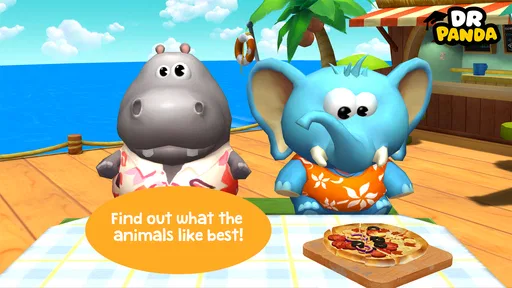
Dr. Panda Restaurant 2 is a child-friendly cooking and role-playing game in which players run a restaurant, prepare meals, serve animal customers, and explore different ingredients and kitchen tools. It is designed around open-ended play rather than strict objectives, allowing children to experiment with recipes and discover reactions at their own pace in a colorful, easy-to-understand environment.
Is Dr. Panda Restaurant 2 suitable for children?
The game is primarily aimed at young children, especially preschool and early elementary-age players. Its controls are simple, the visuals are bright, and the gameplay avoids complicated rules or stressful time limits. Parents should still check the current age rating and store information, because suitability can vary depending on a child’s reading ability, sensitivity, and the device’s available settings.
Does Dr. Panda Restaurant 2 require an internet connection?
Most of the core restaurant activities can generally be enjoyed offline after the game has been installed, which makes it convenient for travel or areas with limited connectivity. However, internet access may be required for downloading the app, receiving updates, restoring purchases, or accessing certain store-related features. Availability can differ between Android and iOS versions.
Are there advertisements or in-app purchases in Dr. Panda Restaurant 2?
Parents should review the app’s current listing before downloading because monetization details may vary by platform, edition, or update. Dr. Panda titles are commonly designed for children and may offer a paid download or optional purchases, but store policies and available content can change. It is recommended to use parental controls and disable unauthorized purchases on the device.
What can children do in Dr. Panda Restaurant 2?
Children can interact with a variety of ingredients, kitchen appliances, dishes, and animal guests while preparing and serving food. The game encourages experimentation, so players can combine items, observe customer reactions, and explore the restaurant without being forced to follow one exact recipe. This makes it more suitable for creative pretend play than for teaching precise cooking techniques.
Play our best games!


